C-Section Recovery
Numbness and Scar Pain After a C-Section: Is It Normal? When Does It Go Away?
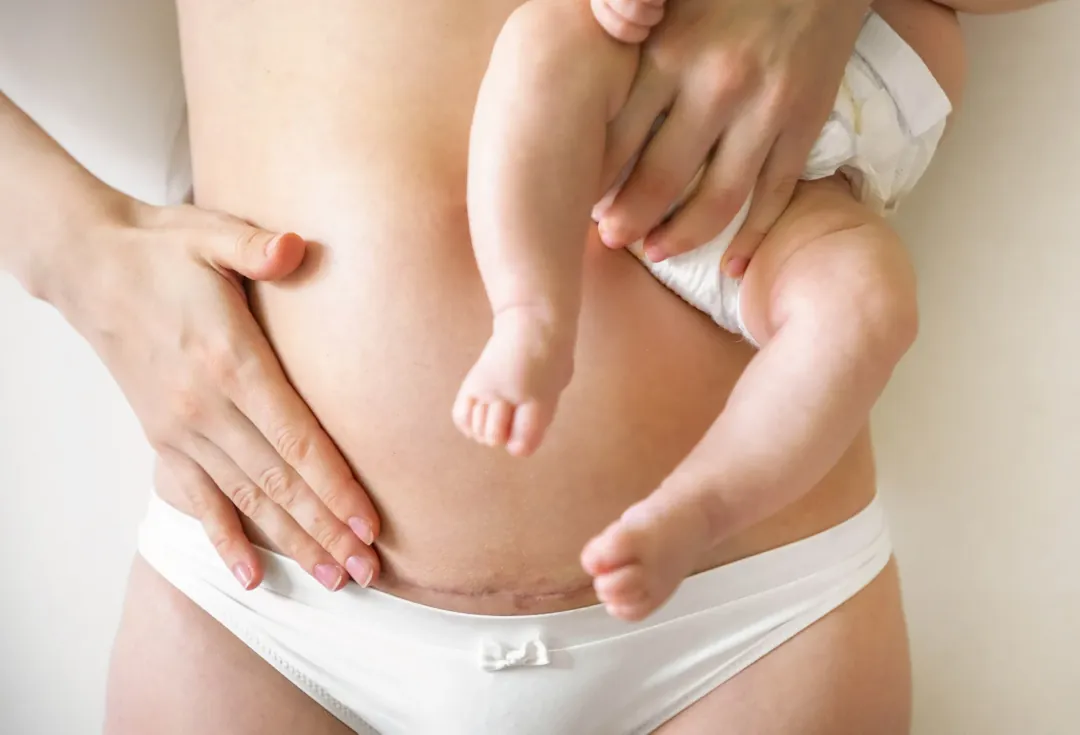
After a C-section, you may feel numbness, loss of sensation, burning, itching, stinging or a pulling sensation around your scar. These symptoms are very common, especially in the first weeks, and are usually part of the healing process.
That is because a C-section is not just a small line in the skin. The skin of the abdomen, the tissues beneath it and the small nerve endings in the surgical area are all affected. So even when the wound looks healed from the outside, it can take longer for the tissues and sensation to recover.
Short answer: Numbness and tenderness around a C-section scar can be normal in the first weeks. But if the pain is increasing, the wound becomes red and warm, there is discharge, or symptoms that interfere with your daily life persist, you should have it checked.
What causes numbness after a C-section?
During a C-section, the skin and underlying tissues of the abdominal wall are cut. The small nerve branches that carry sensation in this area can also be temporarily affected. That is why it is very common to feel touch less below or around the scar.
Sometimes the numbness is only right around the scar; at other times it may feel as if it has spread across a wider area of the lower abdomen. During healing, you may also notice tingling, itching or brief electric-shock-like sensations.
It is expected for the area around the scar to be tender, itchy or numb in the first weeks, and for the scar to look slightly raised. While the outer layer of the wound takes about 6 weeks to heal, the scar can continue to fade in color and mature for up to 2 years.
When does numbness after a C-section go away?
The timeline is not the same for everyone. For some women, the change in sensation decreases noticeably within weeks; for others, it improves more slowly over months.
The most important thing here is not whether the feeling is the same every day, but whether the area gets smaller over time, the sensitivity decreases, and it affects your daily life less. It is also possible for a small area to keep feeling somewhat different.
If the numbness comes with severe burning, being unable to tolerate touch, sharp, knife-like pain, or a pulling sensation that limits your movement, you should not brush it off with “I had a C-section, it’s normal.”
Is C-section scar pain normal?
Pain, tenderness and a pulling feeling with movement can be expected in the first days and weeks. Coughing, getting out of bed, laughing or lifting your baby may feel harder at first.
However, a healing scar should become less painful over time. If, after the wound has closed, pain or tenderness around the scar clearly interferes with your daily life, it is helpful to be assessed by an OB-GYN or a pelvic health physiotherapist.
Pain after a C-section is not one single type; some women describe a deep pulling sensation, while others may experience burning, stinging or sensations similar to nerve pain.
Why does a C-section scar feel hard, tight or stuck?
As a wound heals, the body produces new connective tissue. It is normal for this tissue to feel harder, thicker or less mobile than the surrounding tissue at first.
Some women describe it like this: “The waistband of my pants bothers me,” “My scar pulls when my belly folds,” or “My lower belly feels tight when I stand up.” These sensations do not always mean there are adhesions, but the mobility of the scar and surrounding tissues, skin sensitivity and abdominal wall function should be assessed together.
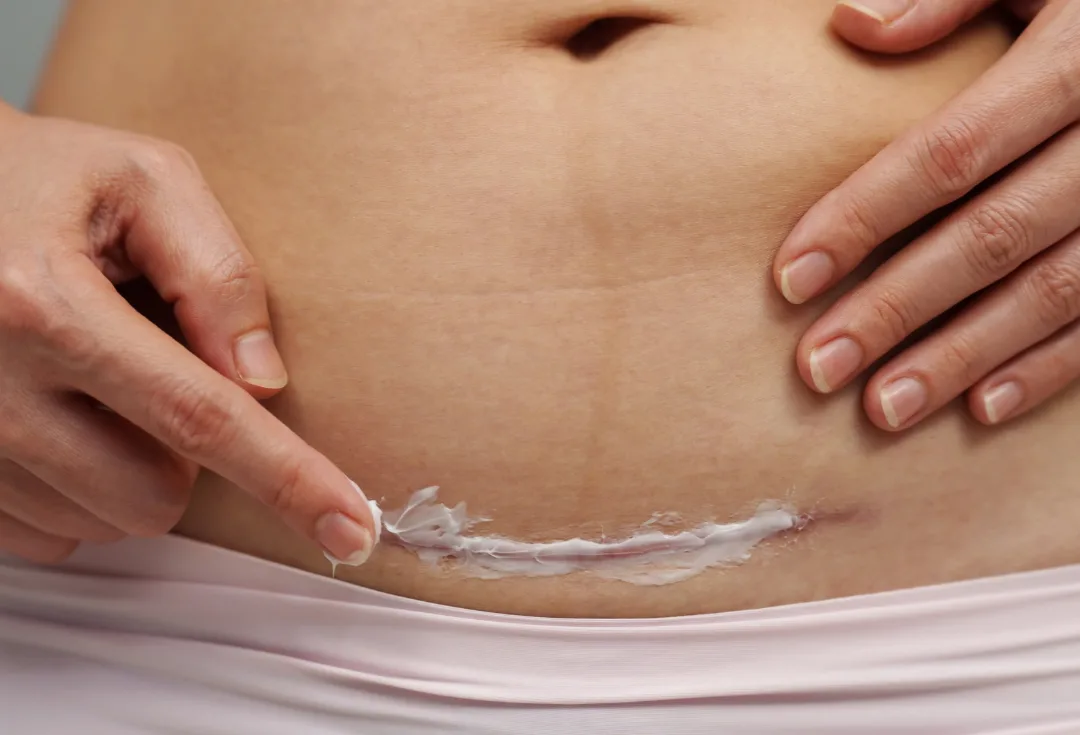
When can you do C-section scar massage?
C-section scar massage should only be started once the wound has fully closed: there should be no open areas, scabs, discharge or signs of infection. For most people, this is around 6–8 weeks after birth; if you are not sure, check with your doctor first.
The first goal is not to “break up the scar” or press hard. The aim is to re-establish safe touch with the area and watch how the tissue responds.
At the beginning, these are enough:
- Gently touching the healthy skin around the scar
- Looking at your scar in a mirror
- Touching the scar very gently with your fingertips
- If the discomfort does not increase, gently moving the skin in small directions
If you feel pain during the massage, you should stop. Burning or pulling may be mild during the first attempts; but severe pain, a clear increase afterward, or tenderness that lasts all day does not mean “I need to press harder.”
What can you do at home for belly numbness after a C-section?
Do not massage directly before your wound has fully healed. Once healing has been confirmed, these gentle steps may help:
1. Touch the tissue without forcing it
Start by touching the skin around the scar rather than the scar itself. Gently feeling different textures with cotton, a soft towel or your fingertip helps you become aware of sensation in this area.
2. Use your breath
As you breathe out, let your belly move gently. Instead of constantly pulling in or guarding your belly, observe the movement of your abdominal wall with relaxed breathing.
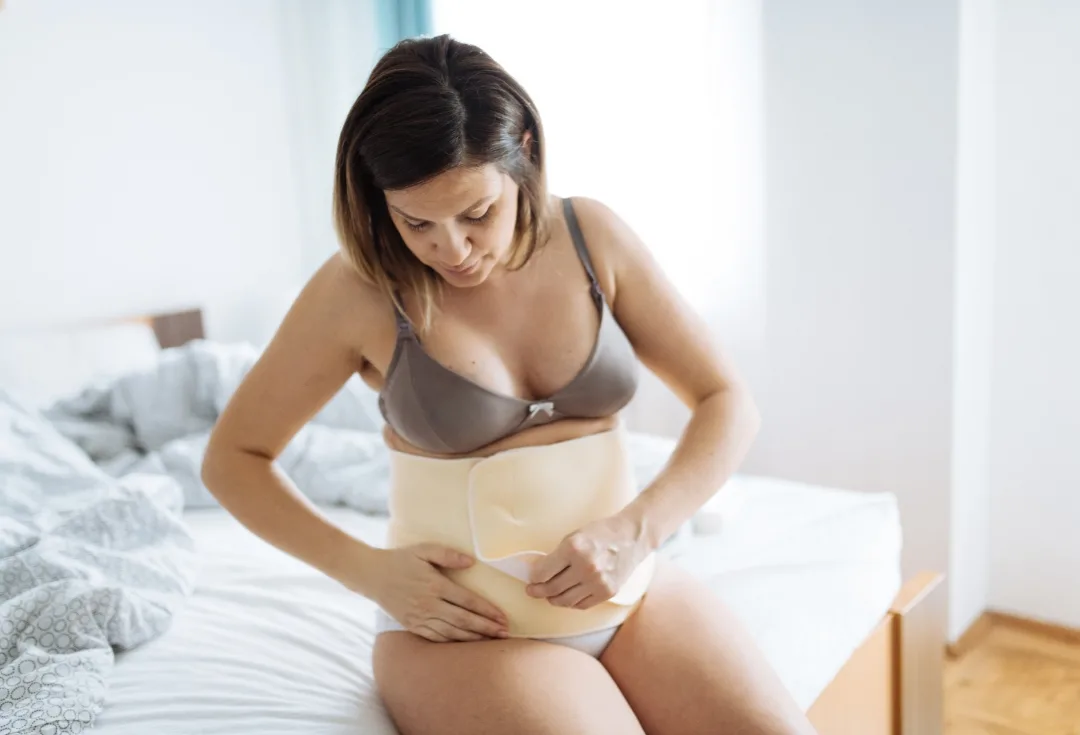
3. Reduce the load in everyday movements
In the early weeks, it may be more comfortable to roll onto your side first and push up with your arms when getting out of bed, to carry your baby close to your body, and not to hold your breath when carrying something heavy.
4. Keep track of your pain
If your pain clearly increases after an activity and lasts a long time, the dose of that activity may be too much for now. The goal is not “not moving at all,” but progressing gradually without pushing yourself.
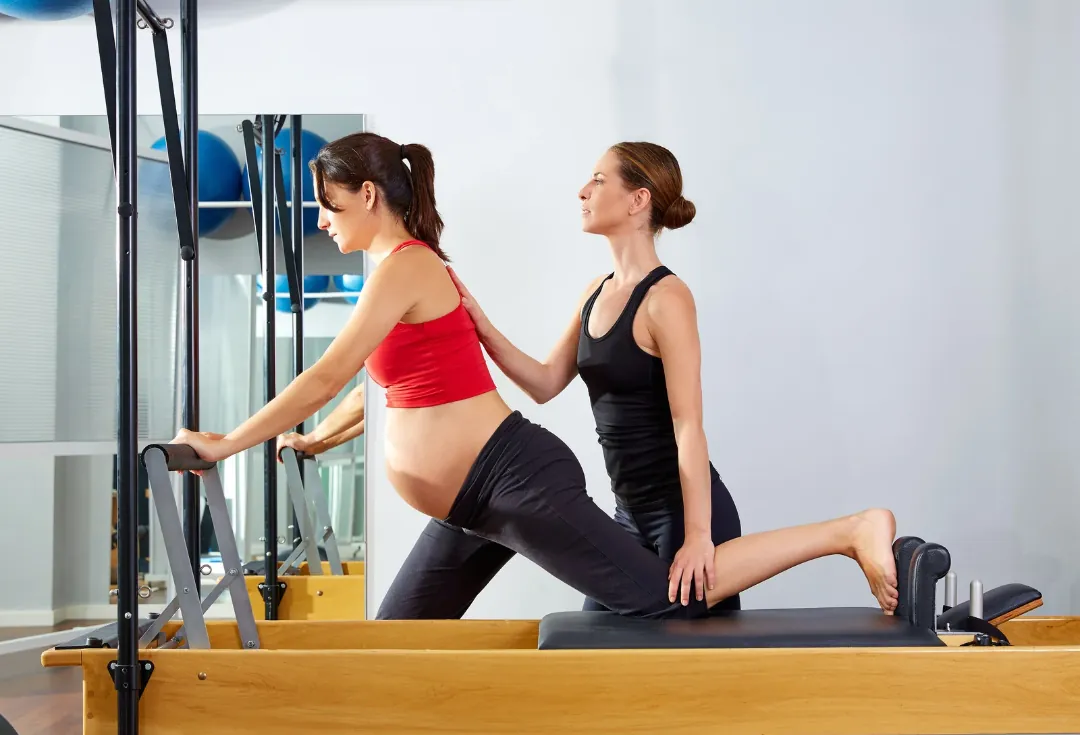
When should you see a physiotherapist after a C-section?
Physiotherapy after a C-section is not about giving everyone the same list of exercises. The appearance, sensitivity and mobility of your scar are assessed together with your abdominal wall, breathing, pelvic floor and everyday movements.
An assessment may be a good idea if you have any of these symptoms:
- Ongoing numbness, burning or sensitivity to touch around the scar
- Pulling/pain when standing up, walking or carrying your baby
- Fear of using your abdomen or a feeling of weakness in your belly
- A feeling of hardness or restricted movement under the scar
- Low back, groin or pelvic pain
- Urinary incontinence, a feeling of pressure, or constipation
- Not knowing how to return to exercise after birth
When should you see a doctor?
Some symptoms call for prompt medical evaluation, not physiotherapy. If you have any of the following, be sure to contact your OB-GYN:
- Severe or steadily worsening pain
- Redness, warmth or swelling of the wound
- Foul-smelling discharge, pus or bleeding
- The wound opening up
- Fever or feeling noticeably unwell
- Shortness of breath, coughing
- Calf pain or swelling
- Painful urination or urinary incontinence
These symptoms may be related to an infection or another complication.
Frequently asked questions
My C-section scar is itchy. Is that normal?
Itching is common while a wound heals. However, if the itching comes with increasing redness, warmth, swelling, discharge or a rash, it should be checked.
Why does my C-section scar burn?
A burning sensation may come from the sensitivity of healing tissues and nerve endings. Mild burning that is getting better is usually not a cause for concern. If it is severe, spreading or makes it hard to tolerate touch, it needs to be assessed.
Is numbness after a C-section permanent?
For most people, sensation improves over time, but how long it takes varies from person to person. A small area may keep a difference in sensation. What matters is that the symptoms decrease and do not limit your daily life.
Does C-section scar massage break up adhesions?
It is not accurate to think of C-section scar massage as a method that “breaks up every adhesion inside.” However, it can be used to support the mobility and reduce the sensitivity of the skin and superficial tissues around a healed scar. If there is pain or discomfort, the approach should be tailored to you.
Conclusion
Numbness, tenderness and a mild pulling sensation after a C-section are usually part of healing. But it is important to pay attention to the signals your body sends: symptoms are expected to decrease gradually; increasing pain, signs of infection or ongoing complaints that affect daily life should be assessed.
At Mama Healing, we do not approach C-section recovery through the scar alone. We assess C-section scar sensitivity, breathing, the abdominal wall, the pelvic floor and your return to daily life together.
You can book an in-person appointment on Bağdat Caddesi in Istanbul, or an online assessment, for physiotherapy after a C-section.
Sources
- American College of Obstetricians and Gynecologists. Cesarean Birth. https://www.acog.org/womens-health/faqs/cesarean-birth
- NHS. Caesarean Section – Recovery. https://www.nhs.uk/tests-and-treatments/caesarean-section/recovery/
- Kingston and Richmond NHS Foundation Trust. Scar Massage After Caesarean Birth. 2024. https://www.kingstonandrichmond.nhs.uk/patients-and-families/patient-leaflets/scar-massage-after-caesarean
- Gilbert I, et al. Exploring the Effects of Standardized Soft Tissue Mobilization on the Viscoelastic Properties of the Cesarean Section Scar. Journal of Integrative and Complementary Medicine. 2022. https://pubmed.ncbi.nlm.nih.gov/35426735/
- Chin EG, et al. A Comprehensive Description of Postpartum Pain After Cesarean Delivery. Journal of Obstetric, Gynecologic & Neonatal Nursing. 2014. https://pubmed.ncbi.nlm.nih.gov/25123692/
Tuğçe Atalay, Specialist Physiotherapist
Istanbul

Author: Tuğçe Atalay, Specialist Physiotherapist
Last updated:
The information on this page is for general information only and does not replace diagnosis or treatment. Please consult your doctor and physiotherapist about your symptoms.