C-Section Recovery
C-Section Scar Massage: When to Start and How to Do It
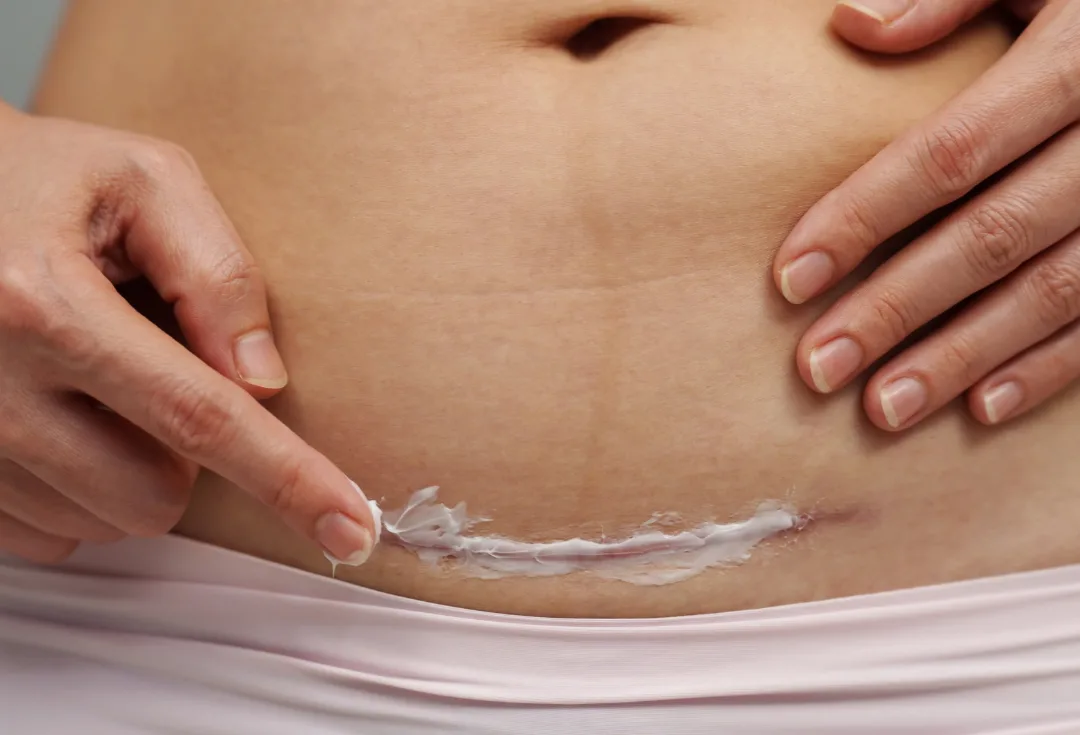
Short answer: You can start C-section scar massage once the wound has fully closed and there is no redness, swelling or discharge left in the area. For most women, this is at least 6–8 weeks after birth. It is recommended that you get your doctor’s approval before you start. The aim of massage is not to “break up” the scar, but to help the skin and the tissues beneath it glide freely in every direction, reduce sensitivity to touch, and ease the pulling sensation when you move. Start gently, without pain, and progress gradually.
What does C-section scar massage do?
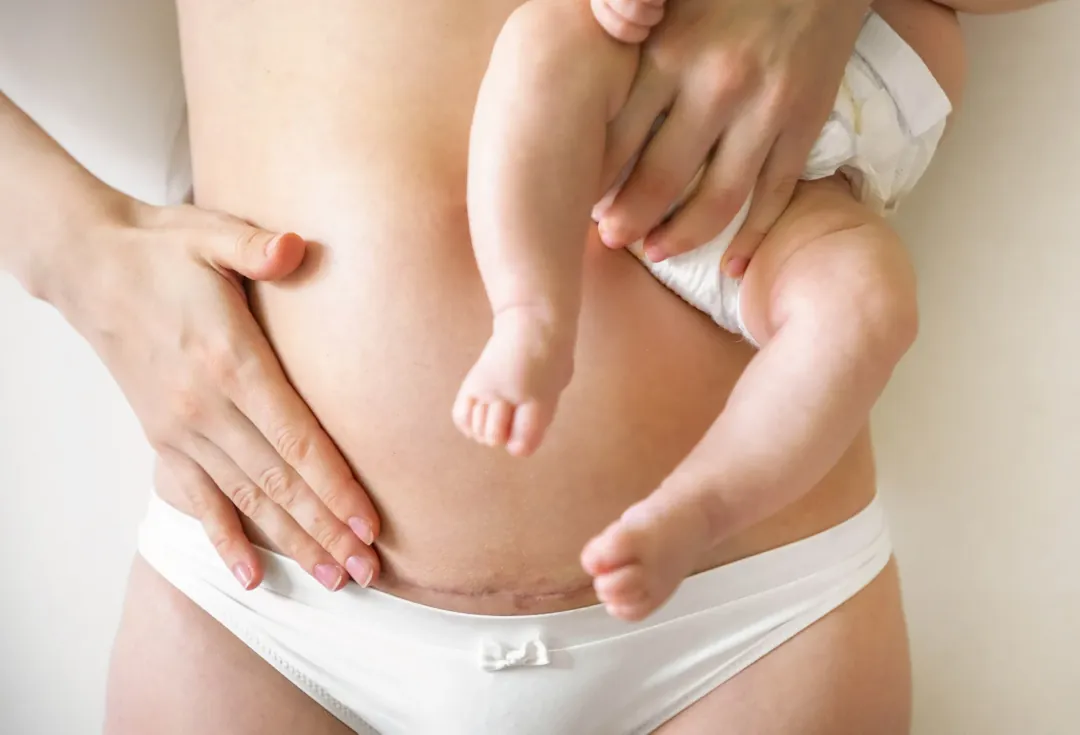
During a C-section, several layers, including the skin, the fat tissue under the skin, the abdominal fascia and the uterus, are opened and closed. Each layer forms its own scar tissue. In the first months, this new tissue can be harder, thicker and less mobile.
Scar massage, or scar mobilization as it is called in physiotherapy, is used to:
- Help the scar and surrounding tissues glide more easily over one another
- Reduce excessive sensitivity to touch or numbness
- Ease the pulling you feel when stretching, standing up or exercising
- Help you reconnect with your own body
Massage does not release adhesions inside the abdomen by hand. Its effect is mainly on the superficial tissues and on sensitivity.
When can you start C-section scar massage?
When to start depends more on the condition of the wound than on the calendar. You can usually start if all of the following apply:
- The wound has fully closed, with no scabs or open spots left
- There is no redness, warmth, swelling or discharge on or around the scar
- You have had your checkup with your doctor and no problems were found
For most women, these conditions are met 6–8 weeks after birth. If wound healing was delayed, you had an infection, or the wound opened, you may need to wait longer.
Don’t think it is too late. Scar tissue keeps remodeling for more than a year. Even if months or years have passed since you gave birth, you can still benefit from scar mobilization.
How do you do C-section scar massage?
The steps below are a general starter guide. At every step, the sensation should stay at the level of a “gentle stretch” and should not turn into pain.
Preparation: Wash your hands and lie down in a comfortable position on your back with your knees bent. At first, you can work with dry hands or with a small amount of moisturizer.
1. Desensitization (for the first days): If the scar is very sensitive, first touch only the area around it, then the scar itself, with a soft cloth or your fingertips. Gradually increase the touch. The goal is for the area to start perceiving touch as “normal.”
2. Start above and below the scar: In the first sessions, work not directly on the scar but on the tissue a few centimeters above and below it. Hold the skin lightly with your fingertips and make small circles.
3. Up-and-down movement: In this step, your fingers do not slide over the skin; you are not rubbing as if applying cream. Place the tips of two or three fingers on the scar and keep them “stuck” to the skin. Then, moving the skin with your fingers, push it about 1 cm first toward your belly button (up), then toward your groin (down). You will feel the tissue under the skin move slightly too. Repeat a few times, then move your fingers 1–2 cm along the scar and do the same movement at the new spot. Work your way from one end of the scar to the other this way.
4. Side-to-side movement: Again, place your fingers on the scar and keep them stuck to the skin. This time, push the skin about 1 cm in the direction the scar runs, toward your right side and then toward your left. If the movement feels harder or seems to catch in one direction, hold gently in that direction for a few seconds. Repeat this step along the full length of the scar too, moving your fingers 1–2 cm each time.
5. Circles: Make small, slow circles along the scar. If you feel a catch in one direction or a firmer spot, work there a little longer, but still gently.
At every step, the sensation should stay at the level of a mild stretch; if it hurts, reduce the pressure.
Once a day for 5–10 minutes is a good start. As the tissue relaxes, you can do it less often.
What is normal to feel during the massage?
- A mild stretching, pulling or “tingling” sensation
- Feeling touch differently or less in numb areas
- Mild tenderness for a short time after massage in the first days
If pain lasts for hours after the massage or gets worse with each session, you are pressing too hard. Reduce the pressure or take a break for a few days.
When should I stop the massage and see a doctor?
Stop the massage and contact your doctor if you have any of the following:
- New or increasing redness, warmth or swelling on or around the scar
- Discharge, bleeding or a bad smell
- The wound opening at any point
- Fever, chills
- Severe or steadily worsening pain
- A lump you can feel that is growing or painful
These symptoms should not be considered part of normal scar healing.
Frequently asked questions
Which cream should I use for C-section scar massage?
You don’t need a special product. A fragrance-free moisturizer or massage oil is enough. At first, working with dry hands makes it easier to hold the tissue; cream is helpful if your skin is dry or for the circular movements.
Does massage help years after a C-section?
Yes, it can be helpful. Studies on scars that have been painful or sensitive for a long time have reported less pain and more mobility after soft tissue mobilization. However, new pain or swelling that appears years later should first be evaluated by a doctor.
Does massage change how a C-section scar looks?
For some people, the scar may feel softer and flatter over time. However, it is not accurate to say that massage will make the scar disappear or, on its own, fix the fold over the scar (the “C-section shelf”).
My scar is numb. Should I massage it?
Numbness is common after a C-section and usually decreases within months. Light touch and desensitization exercises with different textures (a soft cloth, a towel) can help bring sensation in the area back to normal.
Should I do the massage myself or see a physiotherapist?
For mild stiffness and sensitivity, regular massage at home is often enough. If pulling, pain or restricted movement continues despite a few weeks of regular practice, or if it comes with low back pain, constipation, frequent urination or painful sex, an assessment by a physiotherapist is recommended.
Can I do scar massage after a second C-section?
Yes. The same rules apply: once the wound has fully healed and your doctor has given the go-ahead, start gently.
Conclusion
C-section scar massage is a gentle, gradual practice you can safely start at home once your wound has fully healed. The goal is not to force the scar, but to help the tissues move freely again and to support your connection with your body.
Recovery after a C-section is about more than the scar. Getting your abdominal muscles working again, breathing, the pelvic floor and returning to exercise are also part of the process. At Mama Healing, we plan your physiotherapy after a C-section holistically; you can get support in person in Kadıköy or online if you live outside Istanbul.
The information on this page is for general informational purposes only and does not replace diagnosis or treatment. Please consult your doctor and physiotherapist about your symptoms.

Author: Tuğçe Atalay, Specialist Physiotherapist
Last updated:
Sources:
• Royal Berkshire NHS Foundation Trust, Maternity Physiotherapy. Scar tissue mobilisation for perineal scars and Caesarean scars (hasta bilgilendirme broşürü).
• Wasserman JB ve ark. Soft tissue mobilization techniques are effective in treating chronic pain following cesarean section: a multicenter randomized clinical trial. J Womens Health Phys Ther. 2018;42(3):111-119.
• Wasserman JB, Copeland M, Upp M, Abraham K. Effect of soft tissue mobilization techniques on adhesion-related pain and function in the abdomen: a systematic review. J Bodyw Mov Ther. 2019;23(2):262-269.
• Cesarean scar manual therapy, kanıt düzeyi tartışması: Advances in Clinical and Experimental Medicine, 2024;33(4):387.
The information on this page is for general information only and does not replace diagnosis or treatment. Please consult your doctor and physiotherapist about your symptoms.