Diastasis Recti
Postpartum Recovery


Pain during sex after childbirth (postpartum dyspareunia) is a problem many women experience but often do not talk about. Research shows that a significant proportion of women can have pain during sex in the first months after giving birth. Although it eases over time for most women, in some it can last for months or even years.
The good news is this: painful sex after childbirth is, in most cases, a treatable condition.
In the first weeks after birth, some tenderness can be expected as the tissues heal. However, if:
it needs to be evaluated.
Do not keep waiting for a long time just because you were told the pain "is normal and will pass with time."
Rather than a single cause, several factors usually play a role together.
After giving birth, many women assume their pelvic floor muscles are weak. In some women, however, the opposite is true.
Fear of pain, birth trauma, tenderness around the stitches and an involuntary guarding reflex can keep the pelvic floor muscles constantly tightened.
In this case, during sex you may feel:
during penetration.
This is one of the most common causes of sexual pain after childbirth.
As an episiotomy or vaginal tear heals, scar tissue forms.
In some women, this tissue can be:
in nature.
As a result, pain may be felt during sex, especially at the vaginal entrance.
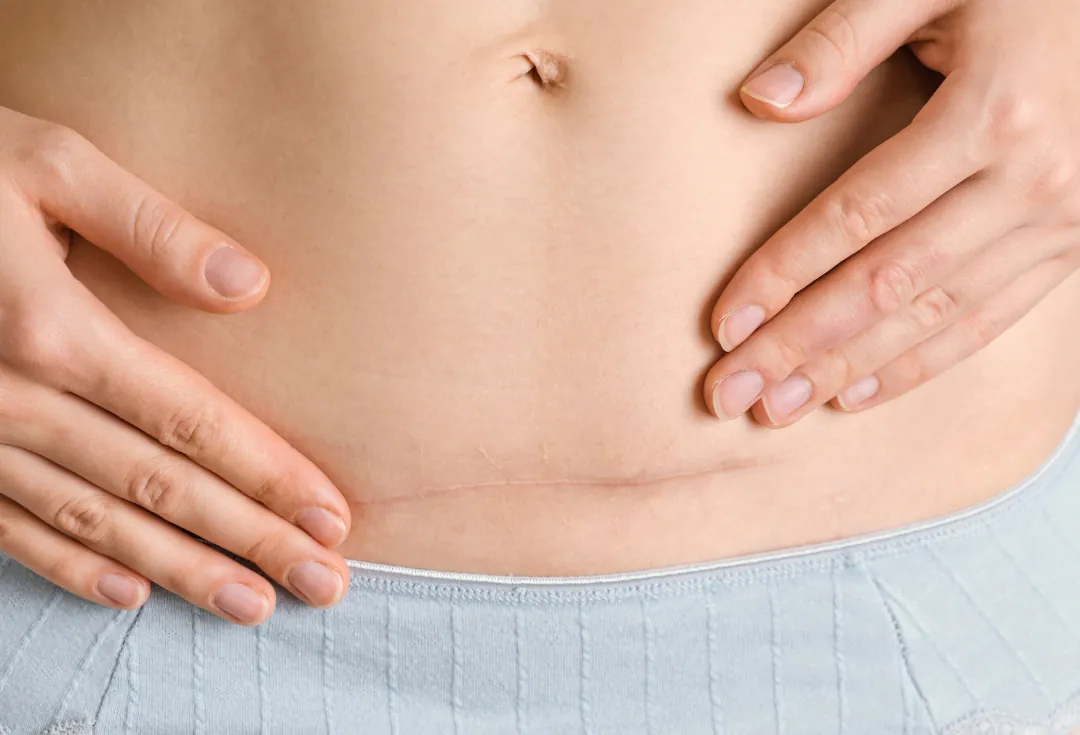
Pain during sex can occur not only in women who had a vaginal birth but also in those who had a C-section.
Adhesions that develop in the abdominal wall and pelvis can cause:
These can all contribute to pain.
Vaginal dryness can develop due to lower estrogen levels, especially while breastfeeding.
Dryness:
The uterus, connective tissues and pelvic support structures work to recover after childbirth.
During this process, especially in the early weeks, you may feel discomfort with deep penetration.
Strain on the tailbone, the sacroiliac joint and the pelvis during birth can also cause pain during sex.
Pain that appears in certain positions in particular may be related to this.
Treatment should be planned according to the cause of the pain.
Giving every woman the same exercises is not the right approach.
After a thorough assessment, one or more of the following methods may be used.
Pelvic floor physiotherapy begins with a detailed assessment aimed at identifying the cause of postpartum pain.
Treatment may include:
all planned individually for you.
The goal is not only to strengthen the muscles but, when needed, to relax them and restore their normal function.
Yes.
Scientific studies show that in women with painful sex after childbirth, pelvic floor physiotherapy can contribute to:
These benefits have been reported in research.
For treatment to succeed, it is important first to identify the real cause of the pain.
It is worth getting evaluated if any of the following apply:
Recovery varies from person to person. Tenderness can occur in the first weeks, but pain lasting for months is not considered normal and should be evaluated.
Yes. Pain during sex can develop after a C-section due to adhesions, tension in the abdominal wall and changes in the pelvic floor muscles.
In some women it can ease over time. However, if the pain lasts a long time or affects daily life, the underlying cause should be investigated and appropriate treatment planned.
Not always. If the pelvic floor muscles are overly tense, exercises aimed only at strengthening can make the symptoms worse. That is why it is important to assess the muscles first and then create an individualized treatment plan.
If you have pain during sex after childbirth, you are not alone, and it is not something you have to live with. The pain may be caused by tense pelvic floor muscles, scar tissue, vaginal dryness, adhesions after a C-section or pelvic joint problems. With a proper assessment and individualized pelvic floor physiotherapy, pain can ease for many women and comfort in their sex life can be regained.

Author: Tuğçe Atalay, Specialist Physiotherapist
Last updated:
The information on this page is for general information only and does not replace diagnosis or treatment. Please consult your doctor and physiotherapist about your symptoms.