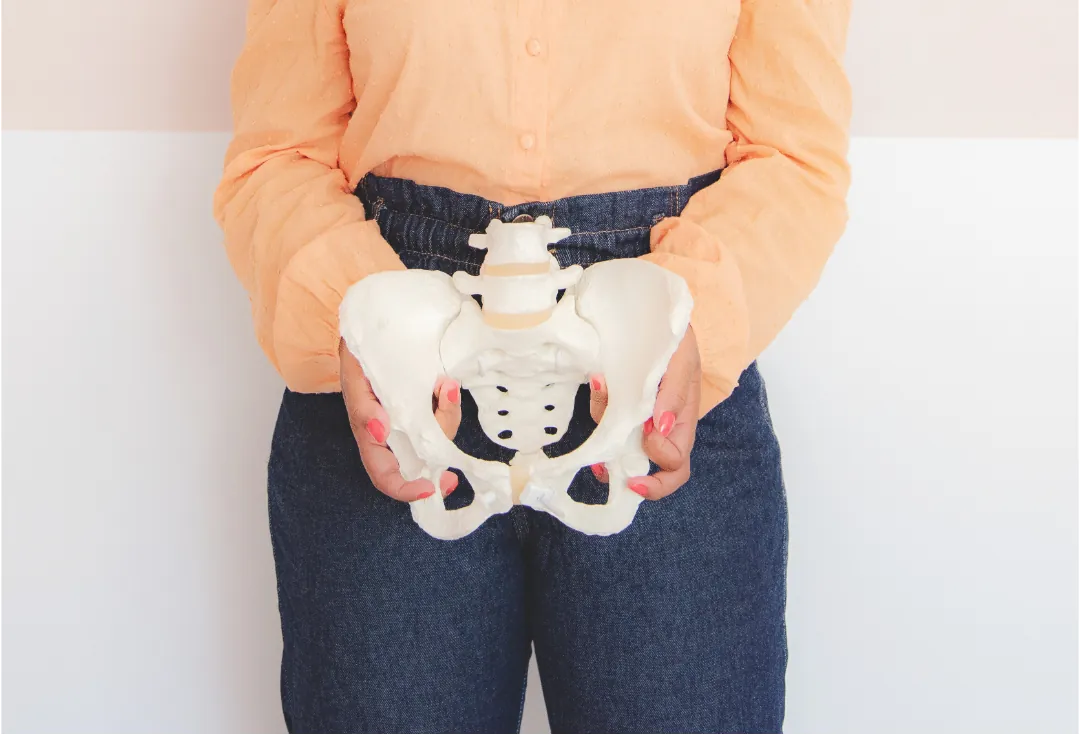
Urinary Incontinence

Exercises for Urinary Incontinence: Should Every Woman Do Kegels?
One of the most common pieces of advice women with urinary incontinence find online is Kegel exercises. If you leak urine when you laugh, cough, sneeze or work out, you have probably been told to "strengthen your pelvic floor muscles" too.
But are the pelvic floor muscles of every woman who leaks urine really weak? Should every woman do Kegels?
The short answer: No.
Weak pelvic floor muscles can be one cause of urinary incontinence. In some women, however, the problem is not weakness but muscles that are overactive, unable to relax fully, or not contracting at the right moment.
That is why exercises for urinary incontinence should not be the same for everyone.
What Are Kegel Exercises?
Kegel exercises are a method of voluntarily contracting and relaxing the pelvic floor muscles.
The pelvic floor is made up of muscles that help support the pelvic organs, such as the bladder, uterus and bowel, and play an important role in bladder and bowel control.
When these muscles do not function properly, urinary incontinence can occur.
But there is an important distinction here:
Pelvic floor dysfunction does not equal pelvic floor weakness.
Muscles that are too tense, or that cannot work correctly at the moment they are needed, are also a form of dysfunction.
Do Kegel Exercises Help Urinary Incontinence?
Yes. Pelvic floor muscle training is one of the core approaches in the non-surgical treatment of stress urinary incontinence in particular.
In stress urinary incontinence, leakage typically happens when pressure inside the abdomen rises, for example when:
- coughing,
- sneezing,
- laughing,
- running,
- jumping,
- lifting heavy objects
or in similar situations that increase intra-abdominal pressure.
Pelvic floor muscle training, done correctly, helps women improve bladder control.
For the exercise to work, however, you need to be able to find the right muscle, contract it correctly and then relax it completely.
Should Every Woman Do Kegels?
No.
Urinary incontinence has more than one type and more than one cause. Two women with the same symptom can have pelvic floor muscles that behave in completely different ways.
In one woman the pelvic floor muscles may truly be weak, while in another the muscles may be:
- overactive,
- constantly contracted,
- struggling to relax,
- poorly coordinated
instead.
So recommending Kegel exercises based only on "I leak urine" is not always the right call.
First, the type of urinary incontinence and how the pelvic floor is functioning should be assessed.
Can Overly Tight Pelvic Floor Muscles Cause Urinary Incontinence?
Yes.
This may sound contradictory at first, because urinary incontinence is usually explained as "weak muscles."
Yet a muscle that is constantly contracted is not necessarily a muscle that works well.
When the pelvic floor muscles are always highly active, they can find it hard to contract further when needed, or to relax completely.
Think of a hand that is clenched into a fist all day. If your hand is already squeezed tight, making an even stronger fist when you need to becomes harder.
The same applies to the pelvic floor: the ability to relax matters as much as the ability to contract.
How Can You Tell If Kegel Exercises Are Not Right for You?
You cannot reach a firm conclusion from symptoms alone. However, if any of the following complaints are also present, it may be wrong to assume that the pelvic floor is simply weak:
- constant tension or pressure in the pelvic area,
- pain during intercourse,
- pain or burning at the vaginal opening,
- difficulty starting to urinate,
- a feeling of incomplete emptying after urinating,
- constipation or excessive straining during bowel movements,
- tailbone pain or pelvic pain,
- symptoms that get worse after doing Kegels.
If you have these symptoms in particular, having your pelvic floor function assessed is a better choice than doing more Kegels.
Can You Do Kegel Exercises Wrong?
Yes, and it may happen more often than you think.
Some people trying to do Kegels end up overusing, instead of the pelvic floor:
- the buttock muscles,
- the abdominal muscles,
- the inner thigh muscles
or holding their breath during the exercise.
Another common mistake is squeezing the muscle without letting it relax enough.
The goal of pelvic floor muscle training is not just to squeeze as hard as possible.
The muscle needs to contract → relax → respond quickly when needed → work in coordination with everyday movements.
Should You Do Kegels by Stopping Your Urine Stream?
Stopping the flow of urine is sometimes described as a way to identify the pelvic floor muscles, but turning it into a regular exercise is not recommended.
Repeatedly interrupting the stream every time you urinate can disrupt the normal voiding mechanism and affect how completely the bladder empties.
Kegel exercises should be done when you are not on the toilet.
Which Exercises Help With Urinary Incontinence?
In physiotherapy for urinary incontinence, the exercise program does not have to consist of Kegels alone.
Depending on the assessment, the program may include:
Pelvic floor muscle training
The aim is to improve muscle strength, endurance and control.
Relaxation exercises
For people with an overactive pelvic floor, the priority is to improve the ability to relax and lengthen the muscles rather than squeeze them harder.
Diaphragmatic breathing
The diaphragm and the pelvic floor work together as a system. Breathing patterns are an important part of both the pelvic floor assessment and the exercise program.
Core and hip exercises
The pelvic floor does not work in isolation. Its coordination with the abdominal, diaphragm, hip and trunk muscles is important.
Functional exercises
The goal is not just being able to do Kegels while lying down.
The aim is to use the pelvic floor correctly during the activities in which you actually leak, such as coughing, sneezing, lifting, running or exercising.
What Can You Do If You Leak Urine When You Cough or Laugh?
When you cough or sneeze, pressure inside the abdomen rises rapidly.
The pelvic floor needs to respond to this change in pressure at the right moment.
In physiotherapy, some people can be taught to activate the pelvic floor appropriately just before coughing or sneezing. In the literature this technique is known as "The Knack."
Here too, what matters is not just squeezing harder but the muscle being able to engage at the right time.
Are Kegels Enough If You Leak Before Reaching the Toilet?
Not always.
If you get a sudden, very strong urge to urinate and leak before you reach the toilet, this may be related to urge urinary incontinence.
In this case, the physiotherapy program may include not only muscle strengthening but also approaches such as:
- bladder training,
- strategies for managing urgency,
- adjusting voiding habits,
- pelvic floor coordination
and similar techniques.
This is why the exercise approach for stress urinary incontinence and for urge urinary incontinence is not the same.
How Long Do Exercises for Urinary Incontinence Take to Work?
The effect of pelvic floor muscle training usually does not come within a few days.
International guidelines recommend supervised pelvic floor muscle training for at least 3 months as one of the first-line treatment options for women with stress or mixed urinary incontinence.
However, the duration and intensity of exercise vary from person to person.
What really matters is not doing as many Kegels as possible every day, but doing the right exercise, at the right dose, with the right technique.
How Is Urinary Incontinence Assessed in Pelvic Floor Physiotherapy?
In pelvic floor physiotherapy, the characteristics of your urinary incontinence are assessed first.
For example:
- When do you leak?
- When you cough or laugh?
- With a sudden urge?
- During exercise?
- How often do you go to the toilet?
- Do you get up at night to urinate?
- Do you have constipation?
- Do you also have pelvic pain or pain during intercourse?
Then, where appropriate, the strength, endurance, ability to relax and coordination of the pelvic floor muscles are assessed.
This way, the answer to "Should I do Kegels?" can be tailored to you.
Frequently Asked Questions
Can Kegel exercises cure urinary incontinence completely?
Pelvic floor muscle training is an effective conservative treatment, especially for stress urinary incontinence. However, results vary with the type and severity of incontinence, the condition of the pelvic floor and whether the exercises are done correctly. Because not all urinary incontinence is caused by weak pelvic floor muscles, the same exercise program is not used for everyone.
How many Kegels should you do a day?
There is no single number of repetitions that applies to everyone. The strength, endurance and ability to relax of your pelvic floor muscles, along with your symptoms, determine the exercise dose. Doing more exercise does not always mean better results.
Should your abdomen tighten when you do Kegels?
The pelvic floor works together with the other trunk muscles, but over-squeezing the abdomen, buttocks and legs during the exercise does not replace correct pelvic floor activation. Being able to work in a controlled way without holding your breath is important.
Can Kegel exercises make urinary incontinence worse?
In some people whose pelvic floor is overactive or struggles to relax, inappropriate or excessive pelvic floor contraction can worsen existing symptoms. If pain, tension or difficulty urinating or emptying the bowels increases after Kegels, an assessment is advisable.
Should you do Kegels for postpartum urinary incontinence?
Pelvic floor muscle training can be used for postpartum urinary incontinence. However, it is better to create a personalized program after assessing the type of delivery, tissue healing, pelvic floor function, any accompanying pain and other postpartum changes.
A Note From the Clinic
If you leak urine, the solution is not always "doing more Kegels."
Being able to relax, engage at the right moment and work in coordination with everyday movements matters as much as having a strong pelvic floor.
That is why knowing which type of urinary incontinence you have and how your pelvic floor muscles work, before you start exercises for urinary incontinence, helps you plan your exercise more accurately.
References
- Dumoulin C, Cacciari LP, Hay-Smith EJC. Pelvic floor muscle training versus no treatment, or inactive control treatments, for urinary incontinence in women. Cochrane Database of Systematic Reviews. 2018;10.
- National Institute for Health and Care Excellence (NICE). Urinary incontinence and pelvic organ prolapse in women: management (NG123). Updated recommendations.
- European Association of Urology. EAU Guidelines on Non-neurogenic Female Lower Urinary Tract Symptoms.
- International Continence Society. Pelvic floor muscle training and terminology resources.
- Miller JM, Sampselle C, Ashton-Miller J, Hong GR, DeLancey JOL. Clarification and confirmation of the effect of volitional pelvic floor muscle contraction to preempt urine loss (The Knack maneuver). International Urogynecology Journal. 2008;19:773–782.

Author: Tuğçe Atalay, Specialist Physiotherapist
Last updated:
The information on this page is for general information only and does not replace diagnosis or treatment. Please consult your doctor and physiotherapist about your symptoms.