Diastasis Recti
Postpartum Recovery

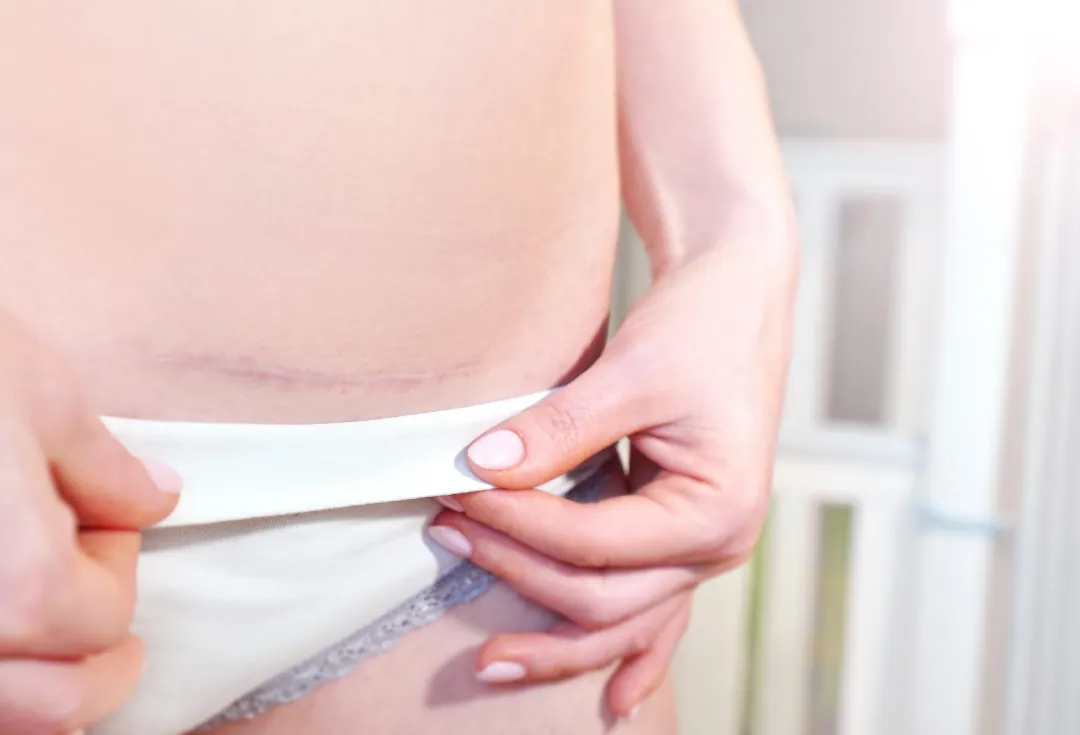
Have you noticed numbness, tingling or unusual sensations around your C-section scar? During recovery after a cesarean, pain and stitches are often discussed, but nerve-related symptoms are usually not explained, and this can be confusing.
These changes in sensation around the incision are very common and are part of your body's healing process. At the same time, it is possible to support this process and make it more comfortable.
A C-section is a surgical procedure. During the operation, the surgeon passes through several layers of tissue, including the skin, connective tissue, abdominal muscles and uterus. Although surgeons take care to protect the nerves, some nerves can be affected in the process.
In particular, the nerves that run through the lower abdomen and carry sensation can be stretched during surgery or become sensitive during healing in connection with scar tissue. This can lead to different sensations in the period after surgery.
Nerve entrapment after surgery is when a nerve becomes trapped in the incision line or within the scar tissue that forms. This entrapment puts pressure on the nerve and can cause changes in sensation.
In this case, even a light touch can be uncomfortable, and some women experience a burning sensation or numbness. Sometimes there is no clear pain, just a feeling that something feels different.
When nerves are affected after a C-section, different sensations can appear around the scar and in nearby areas.
Numbness is one of the most common symptoms and is usually felt around the scar or in the lower abdomen. In addition, burning or stabbing pain can occur, and this pain may sometimes spread to the sides or the back.
Tingling or a pins-and-needles feeling is also commonly described. In some cases, touch that would normally not be painful becomes uncomfortable. Even water in the shower or the pressure of clothing can cause sensitivity.
These symptoms usually appear early after surgery and decrease over time. In some cases, however, they can also appear later as scar tissue develops.
Experiencing numbness or altered sensation for a certain period after a C-section is considered normal. Because nerve tissue heals more slowly than other tissues, it is good to know that this process can take weeks or even months.
For most women, these symptoms decrease and disappear over time. However, complaints that persist for a long time or keep getting worse may suggest nerve entrapment or scar tissue involvement.
If numbness, burning or tingling around the scar does not ease within a few weeks, or if it has started to affect your daily life, it is important to have it assessed.
Also, if the pain keeps increasing or spreading, or if you develop extreme sensitivity to touch, getting professional support can help prevent the problem from becoming chronic.
Nerve-related symptoms after a C-section can be uncomfortable, but they do not have to be permanent. With the right approaches, the nervous system can be retrained and the symptoms reduced.
Sensory retraining plays an important role in this process. Light, controlled touch is applied around the scar so that the brain can reorganize the signals coming from this area. Over time, sensitivity decreases and the tissues become more tolerant.
Improving scar tissue mobility is also important for healing. The connective tissue that forms as the incision heals can sometimes create adhesions with the surrounding tissues. These adhesions can restrict the movement of nerves and cause pain. Manual work on the scar helps these tissues become more flexible and reduces pressure on the nerve.
Recovery after a C-section is not limited to the scar. The abdominal muscles, connective tissues and pelvic floor are also affected by this process. That is why restoring the coordination of breathing, core and pelvic floor is an important part of recovery.
Numbness, burning and tingling around the scar after a C-section are common and are often part of the healing process. However, when these symptoms last a long time or become bothersome, it is important to support them with the right approach.
You are not alone while your body heals, and with the right support it is possible both to feel more comfortable and to speed up your recovery.
References
1. Loos, M. J., Scheltinga, M. R., Mulders, L. G., & Roumen, R. M. (2008). The Pfannenstiel incision as a source of chronic pain. Obstetrics & Gynecology, 111(4), 839-846.
2. Sng, B. L., Sia, A. T. H., Quek, K., Woo, D., & Lim, Y. (2009). Incidence and risk factors for chronic pain after caesarean section under spinal anaesthesia. Anaesthesia and intensive care, 37(5), 748-752.
3. Tan, H. S., & Sng, B. L. (2022). Persistent pain after childbirth. BJA education, 22(1), 33-37.

Author: Tuğçe Atalay, Specialist Physiotherapist
Last updated:
The information on this page is for general information only and does not replace diagnosis or treatment. Please consult your doctor and physiotherapist about your symptoms.